Leading design at Docswell to help them go from MVP to public launch
Docswell is a UK-based medtech company that helps medical practices completely digitise their workflow.
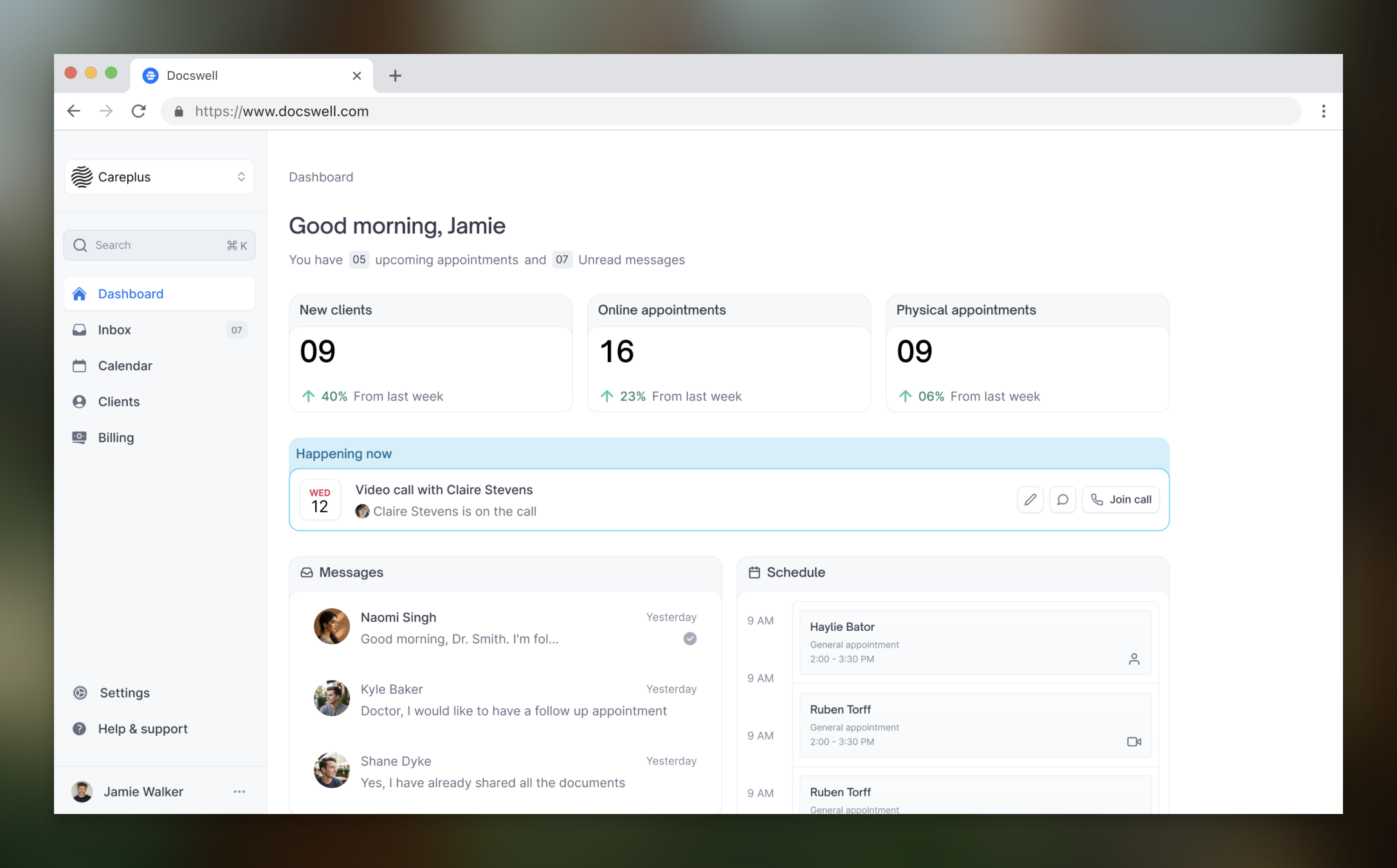
The Problem: Fragmented Workflows in UK Digital Healthcare
At the time, UK medical practitioners relied on multiple disconnected tools for appointments, records, and communication, creating time-consuming workflows that pulled focus away from patient care.
When I joined, there was already an early MVP, but as the company shifted its focus to therapist-led practices, I redesigned both the practitioner and patient portals to better support new needs and prepare the platform for its first public release.
Role: Design and Systems Ownership
I was the sole designer on the team and wore multiple hats. I led user research, design system, and end-to-end UI design. I also played a pivotal role in product decisions while collaborating closely with the Founder and COO.
Business Impact
- Redesigned the practice and client portals so clinicians could manage messaging, scheduling, and patient context in one place, replacing a fragmented, multi-tool workflow.
- Collaborated with the co-founders and engineering team using Linear and continuous design handoff practices to accelerate MVP development, going from concept to MVP launch in 4 months.
- Ran clinician interviews to validate real practice workflows and used the findings to rank the MVP backlog around the highest-friction tasks.
- Built a shared design system used across patient-facing and internal tools, so new features reused the same patterns instead of being designed and built from scratch.
- Designed a mobile-responsive patient portal so clients could complete core tasks on their phone, removing a desktop-only gap that had been blocking access.
Collaborative Workflows
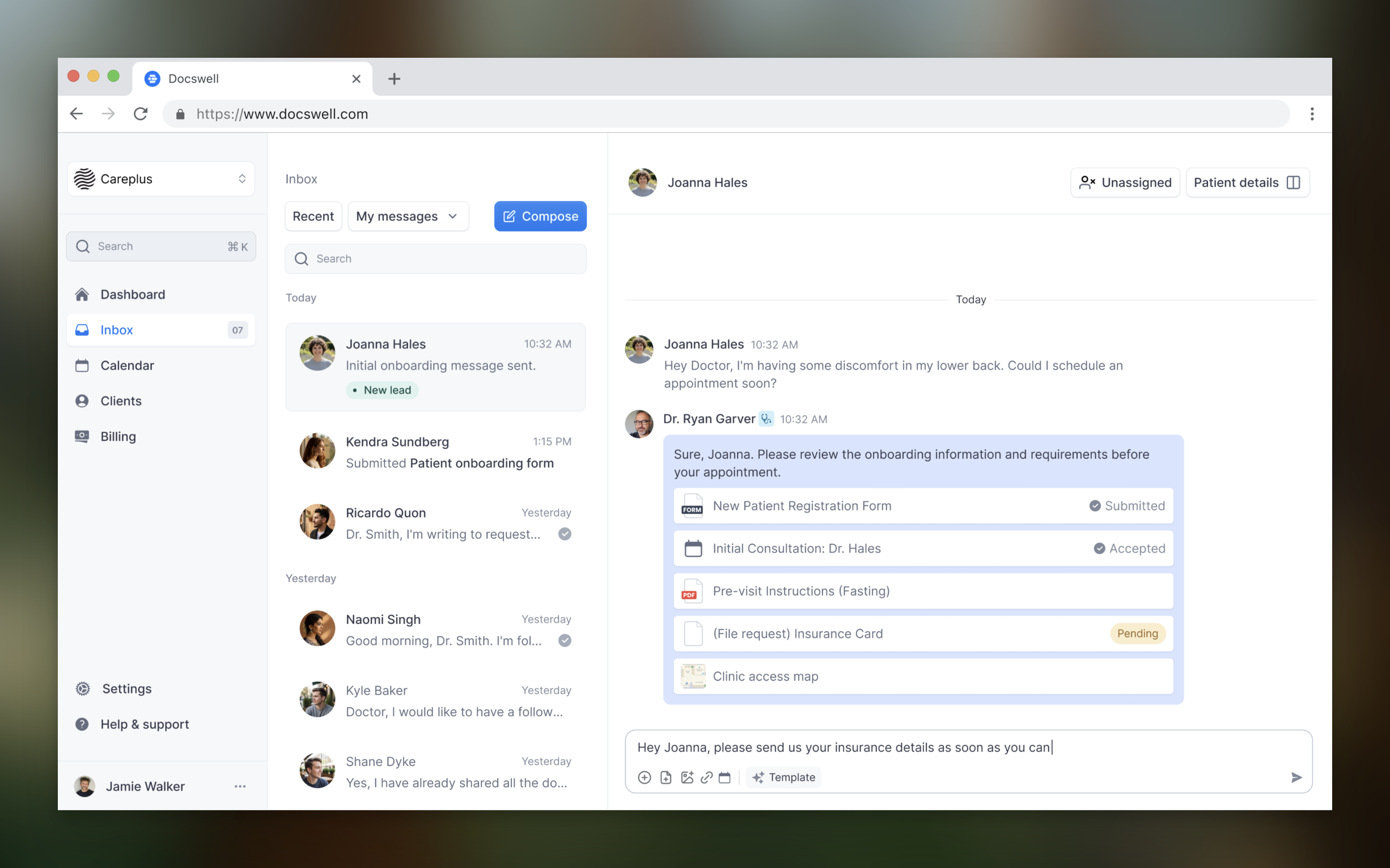
A centralized workspace designed to coordinate care and manage patients across clinical and administrative teams. By consolidating communication, delegation, and progress tracking into a single view, the interface eliminates tool-switching and accelerates team response times.
- Shared Ownership & Automated Tracking: Staff can manually sort and assign incoming patient chats to specific practitioners, while the system automatically updates the case status when patients submit files or forms.
- Structured Message Templates: To streamline repetitive administrative steps, practitioners can deploy bundled templates that aggregate required registration forms, compliance instructions, and file requests into a single message rather than sending documents one by one.
Centralizing Practice Operations
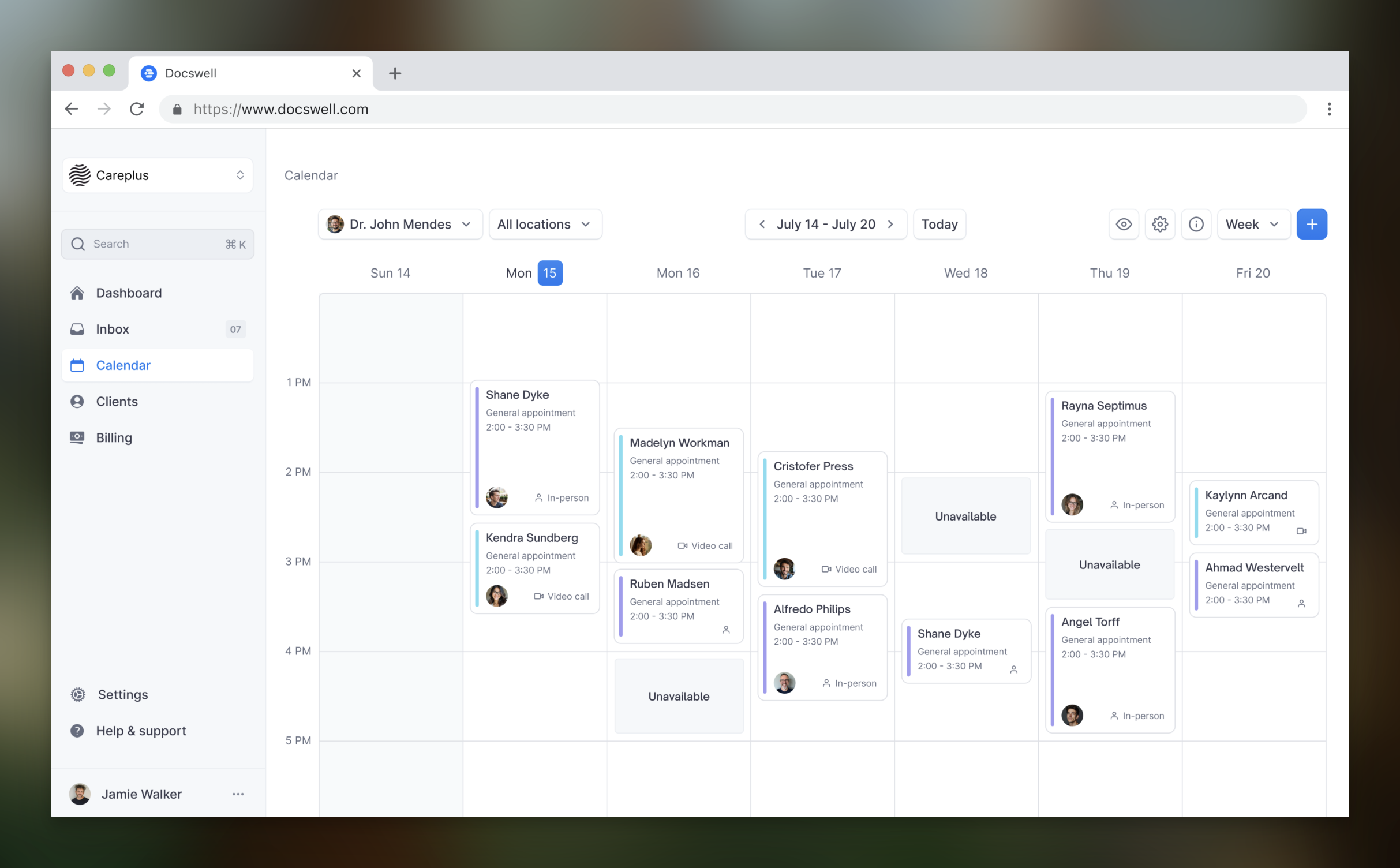
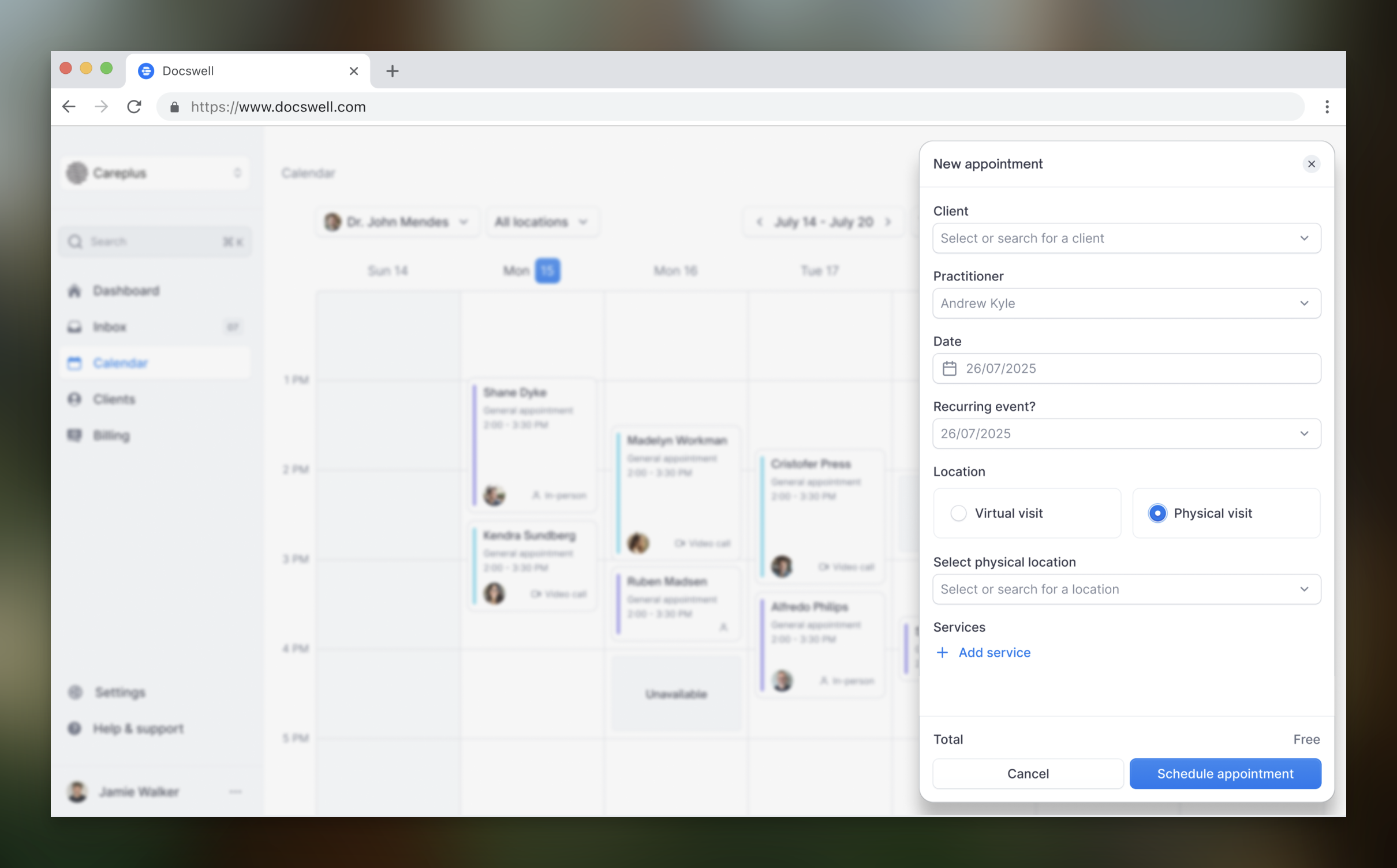
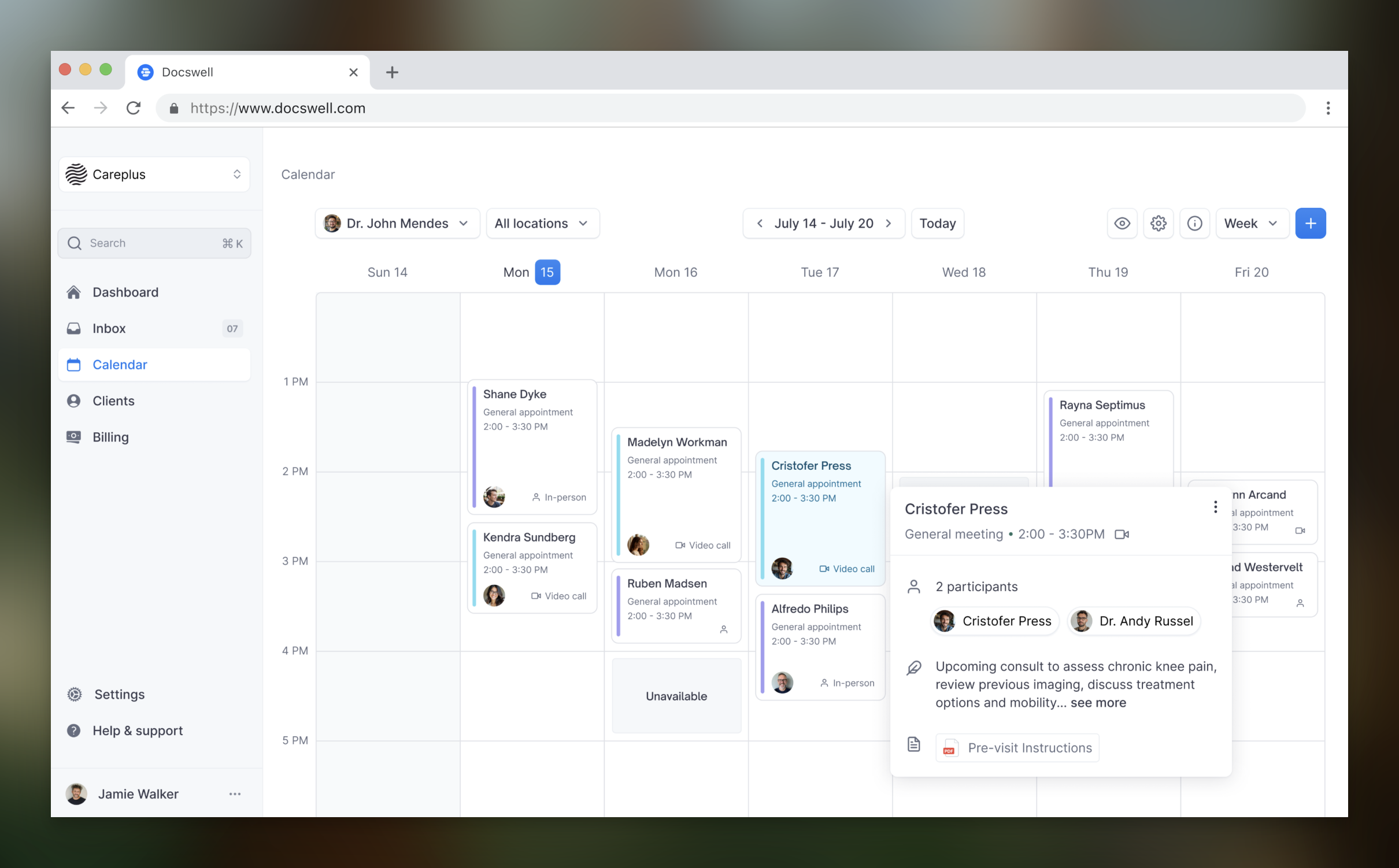
A scheduling hub built to manage complex logistics across multiple practitioners, physical clinic locations, and virtual consultations. The design balances high information density with clear visual landmarks, making it easy for staff to coordinate practice resources quickly.
- Multi-Dimension Filtering: Staff can quickly filter a dense calendar view by individual practitioners or specific physical locations. Clear color coding helps users instantly tell the difference between video calls, in-person care, and blocked administrative time.
- Context at a Glance: Clicking an appointment card surfaces immediate context without forcing the user to leave the page. The system reveals the participating clinicians, specific care notes, and attached documents right inside the schedule view.
- Hybrid Coordination: The creation flow scales across both physical locations and virtual care. It dynamically accounts for recurring dates, and specific practice services within a single side panel to keep setup simple.
Managing patient records and history
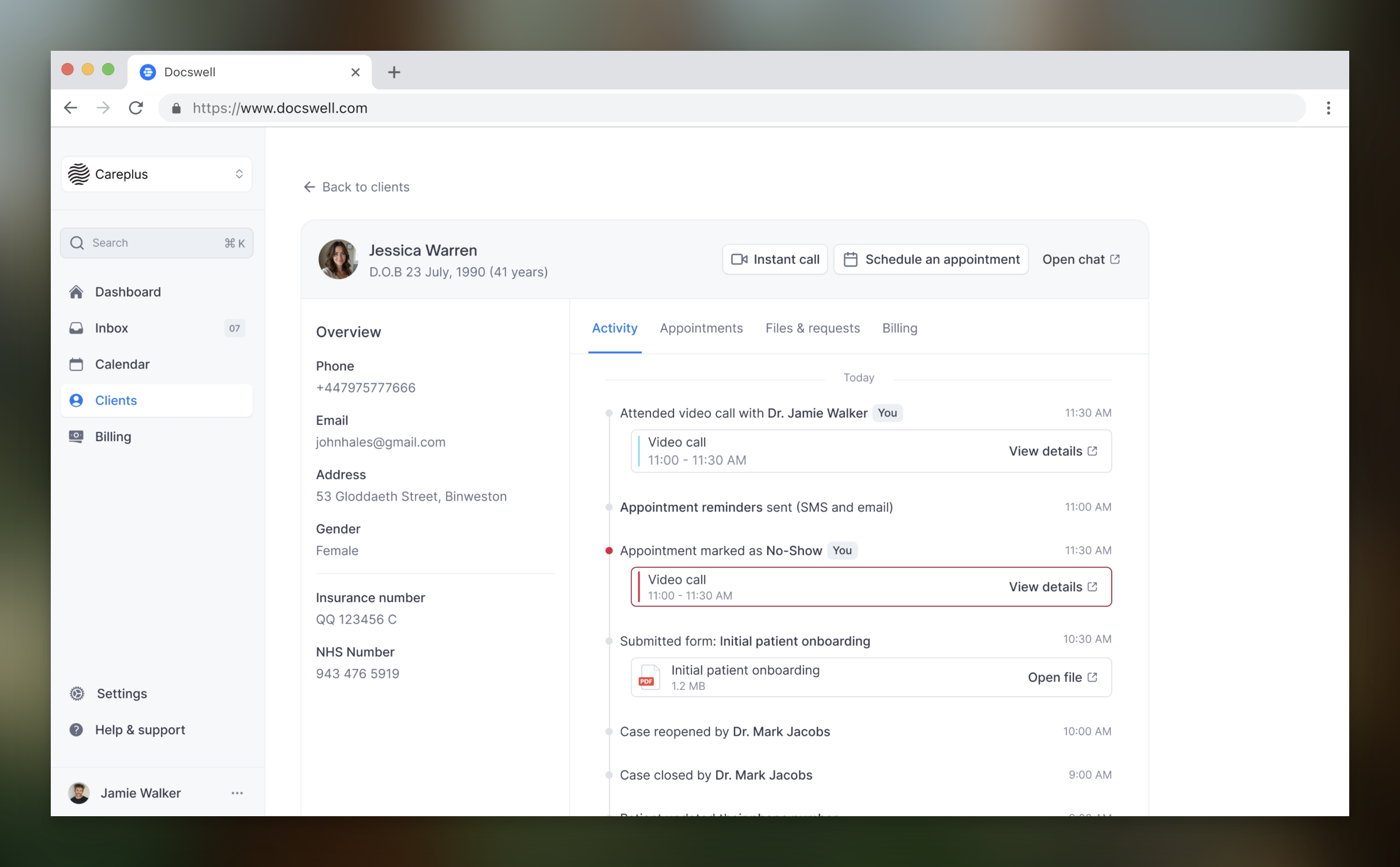
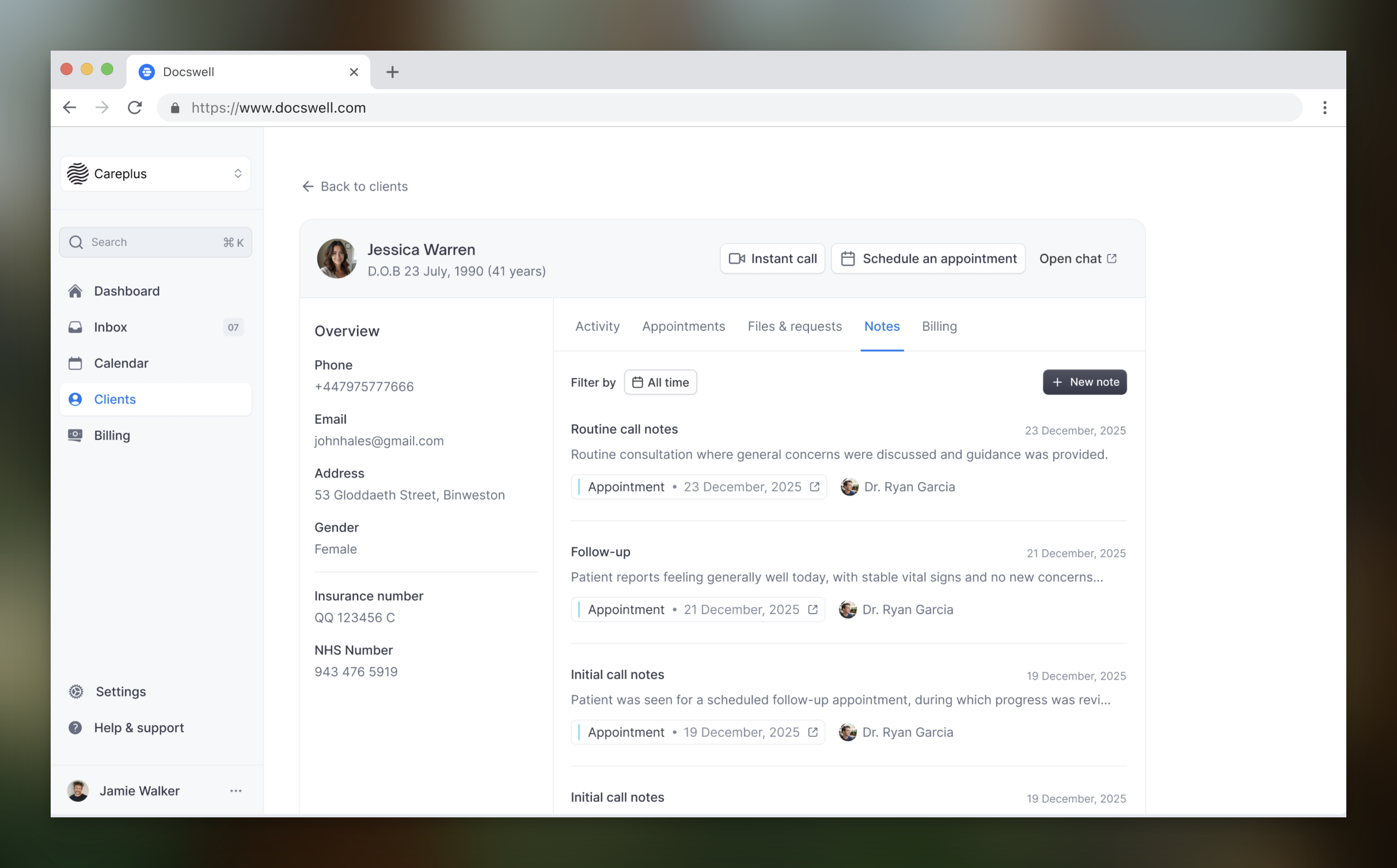
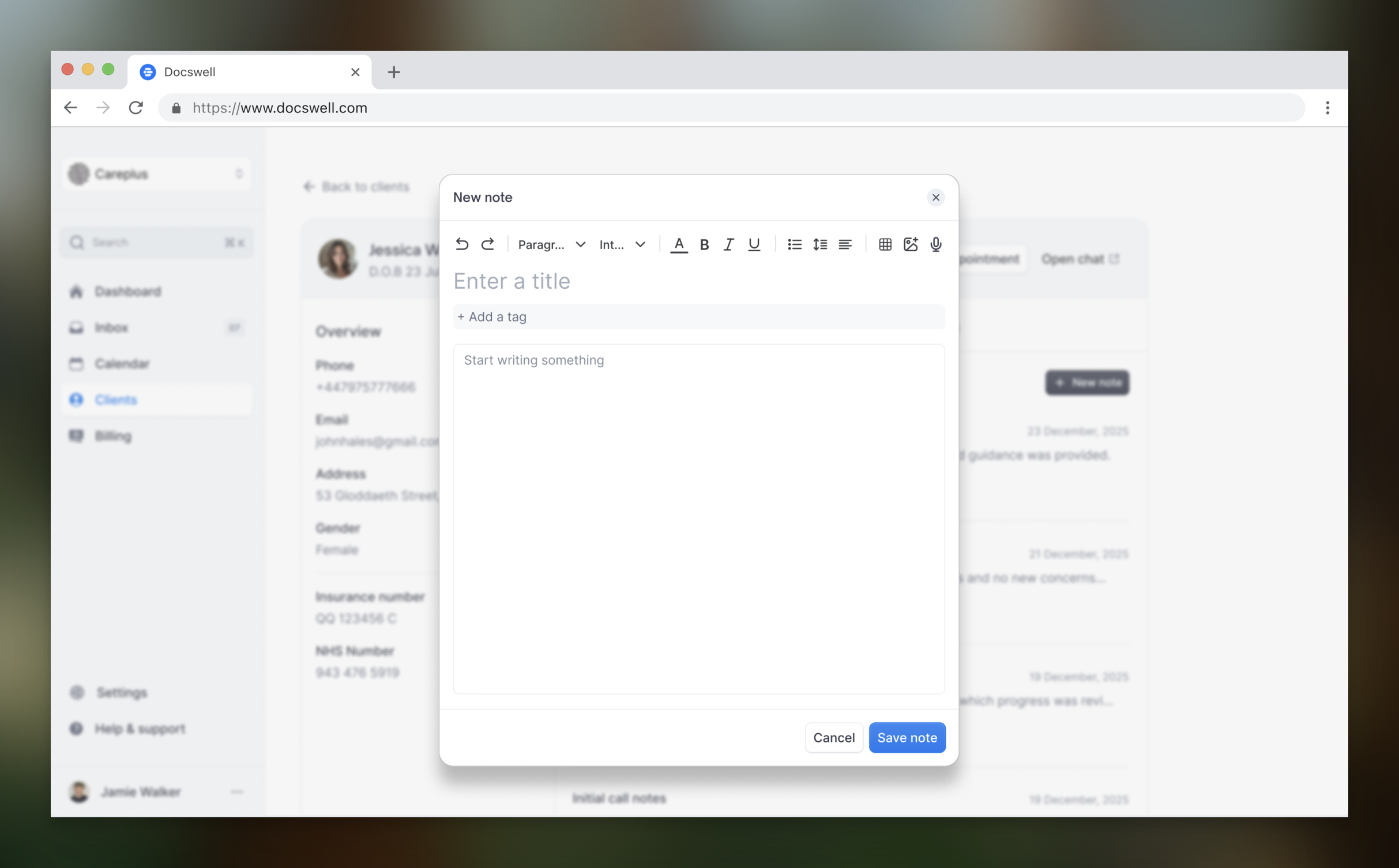
A central workspace that combines a patient's care history with clinical documentation tools, keeping critical medical details visible in one place.
This allows practitioners to maintain full contextual awareness of a patient's entire history while simultaneously capturing new clinical insights during a live consultation.
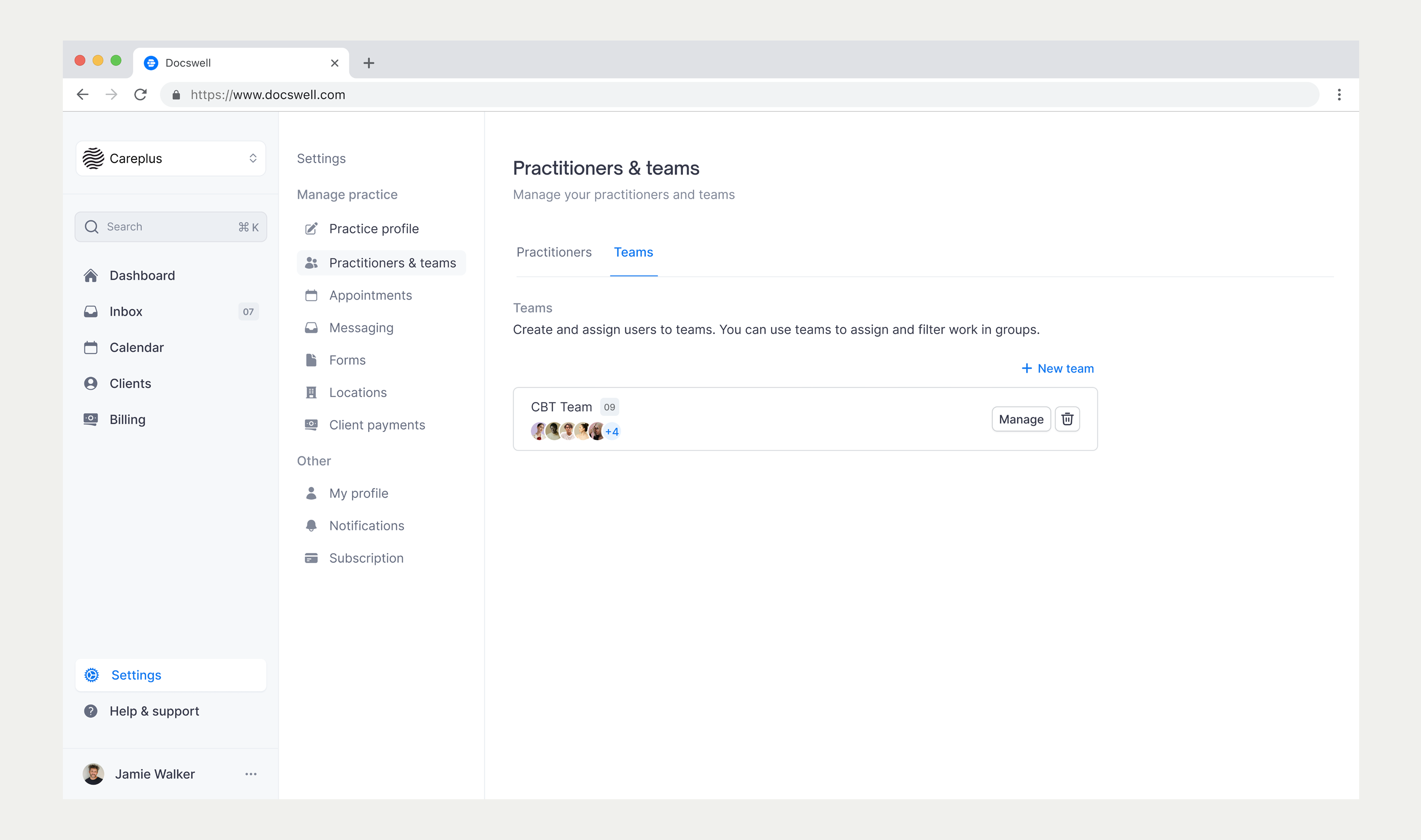
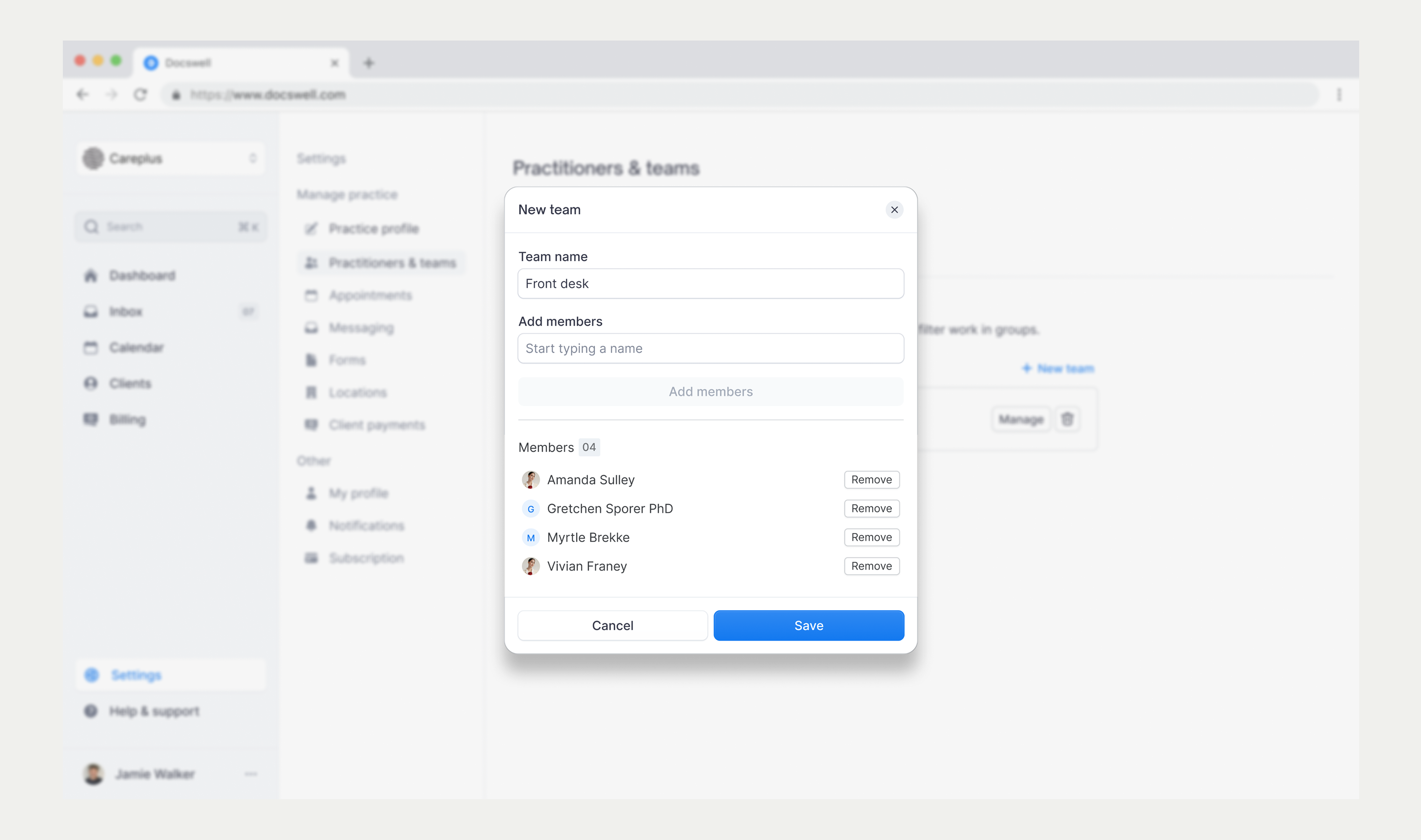
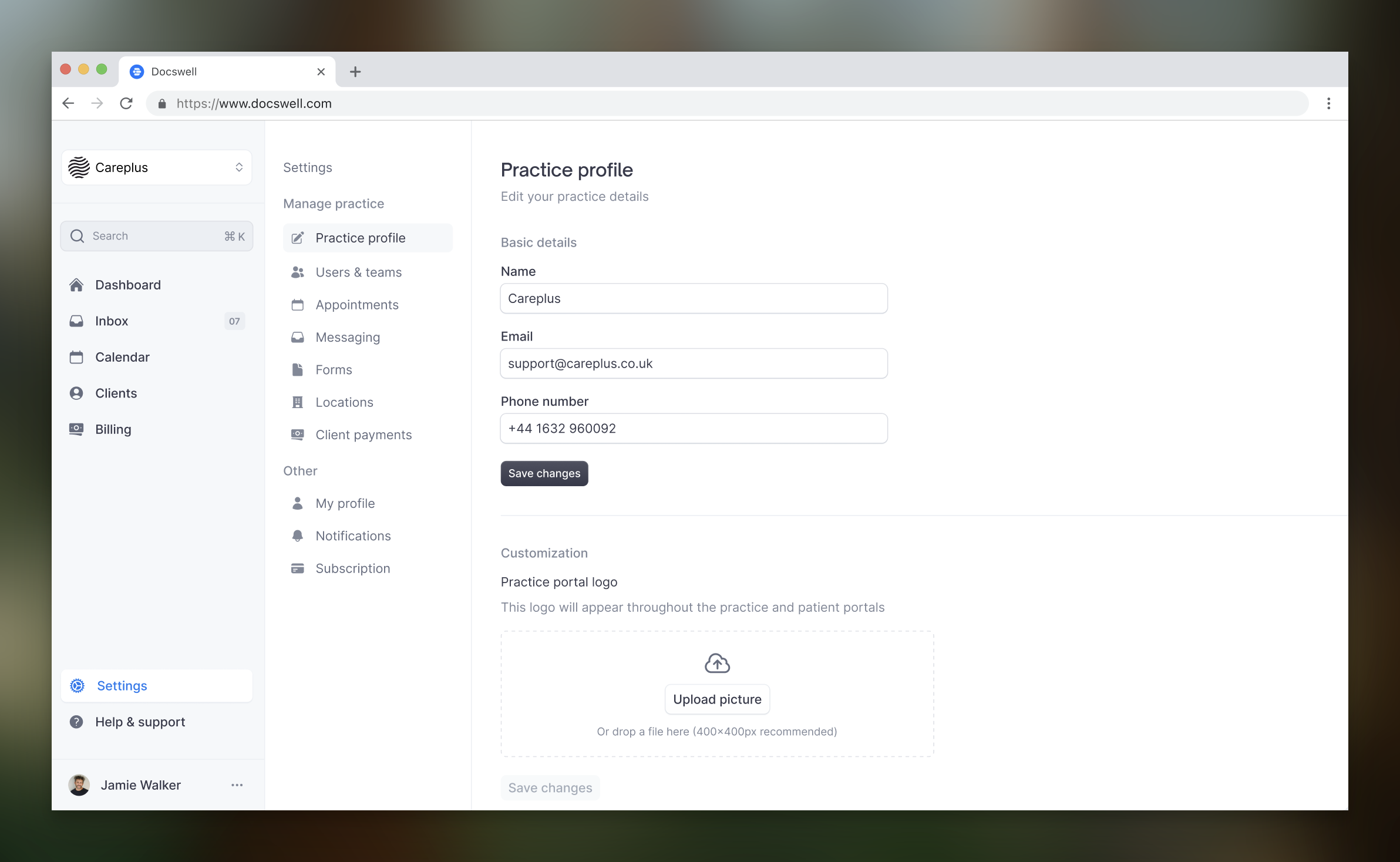
Designing the Practice Administration & Governance
The settings experience was restructured into a clear, well-organised system, making complex practice configuration easier to understand and manage.
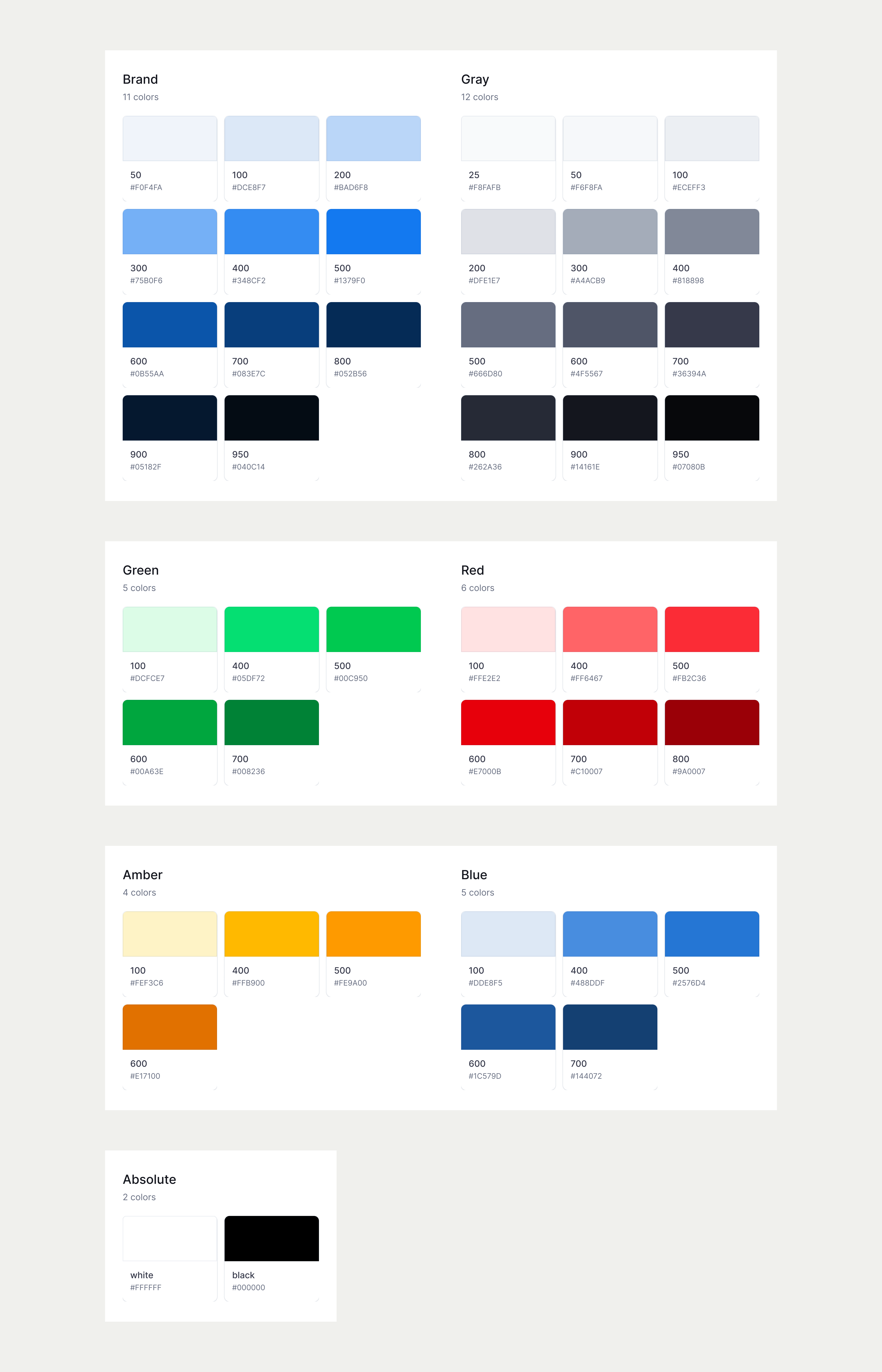
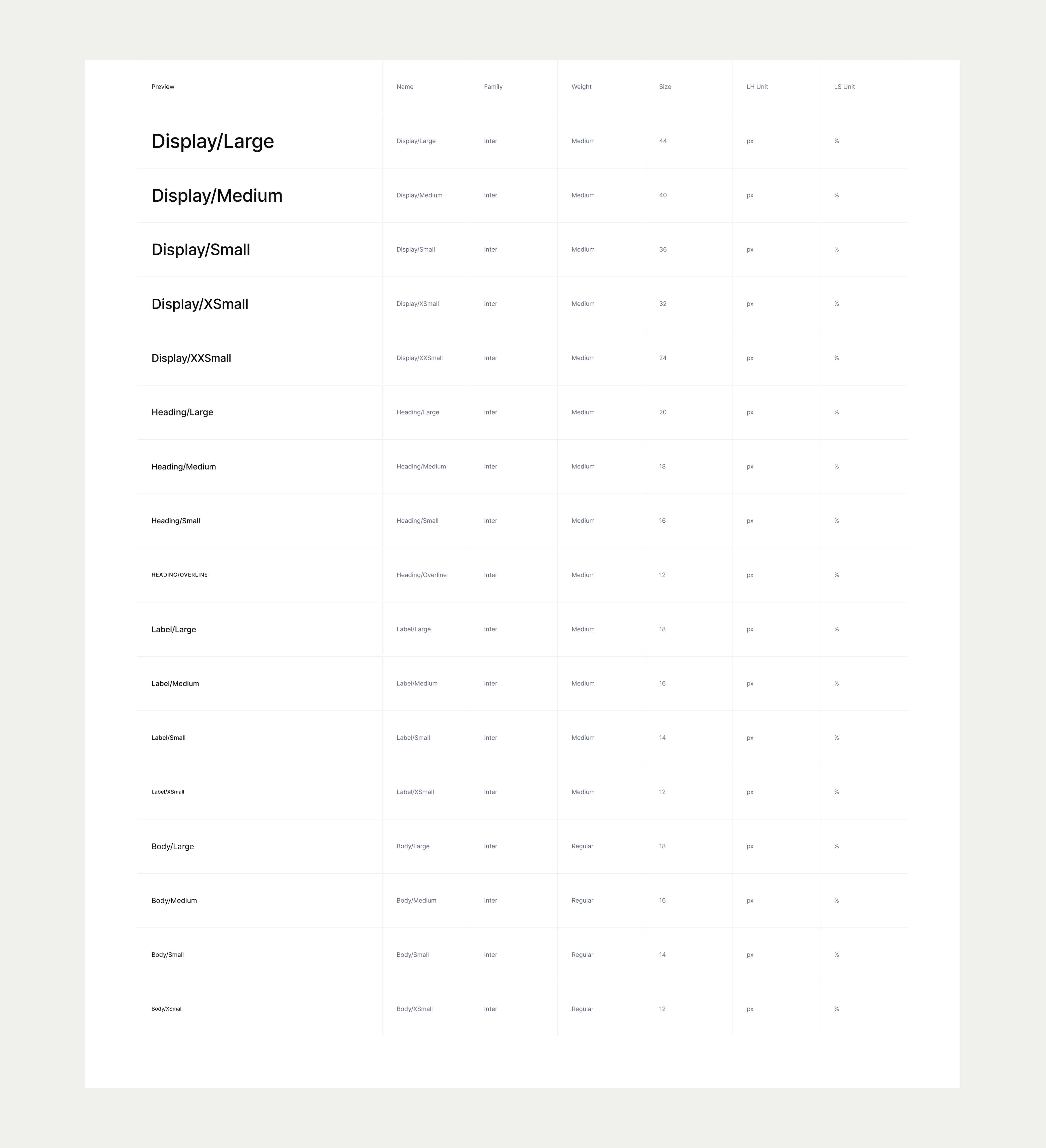
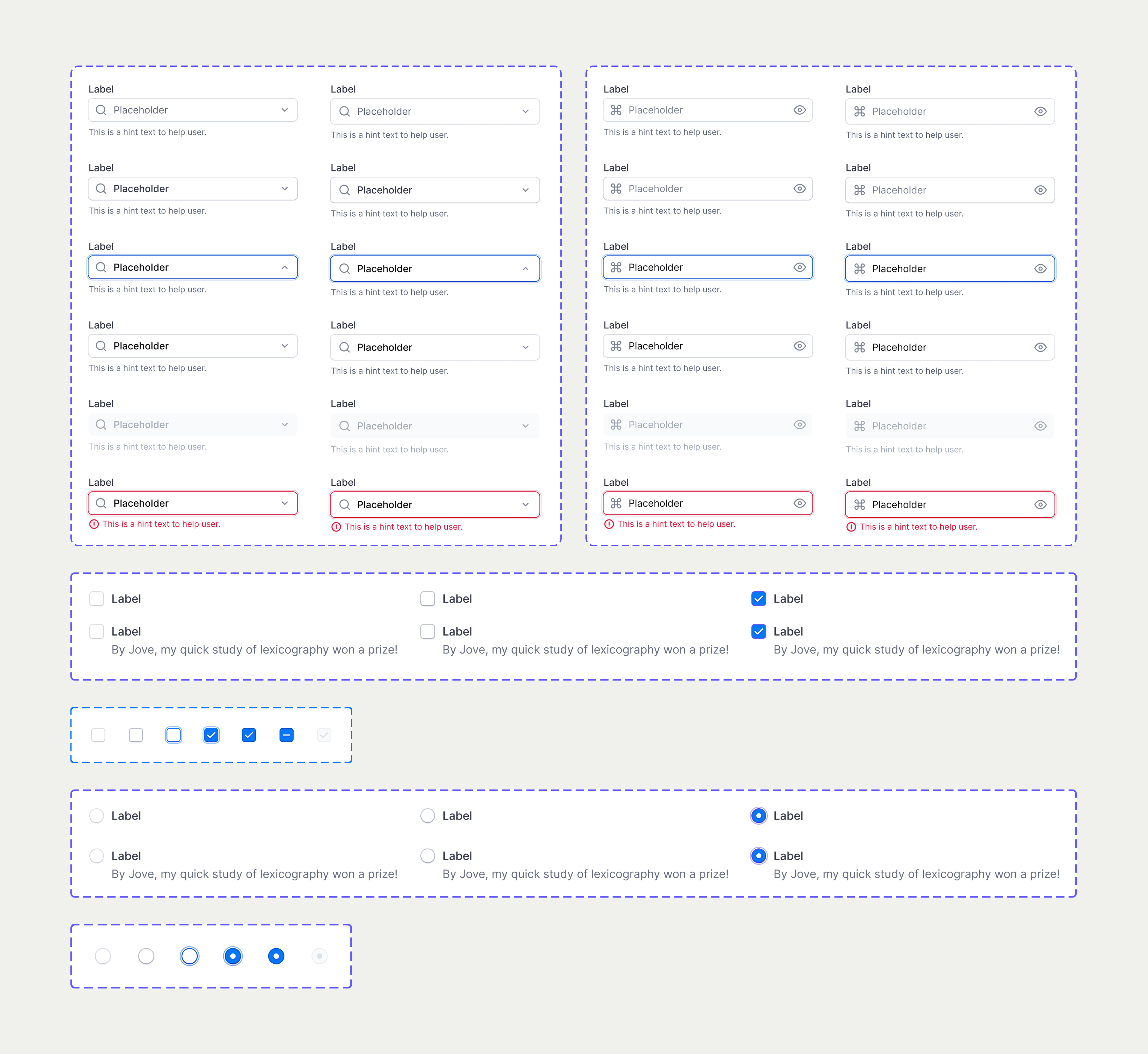
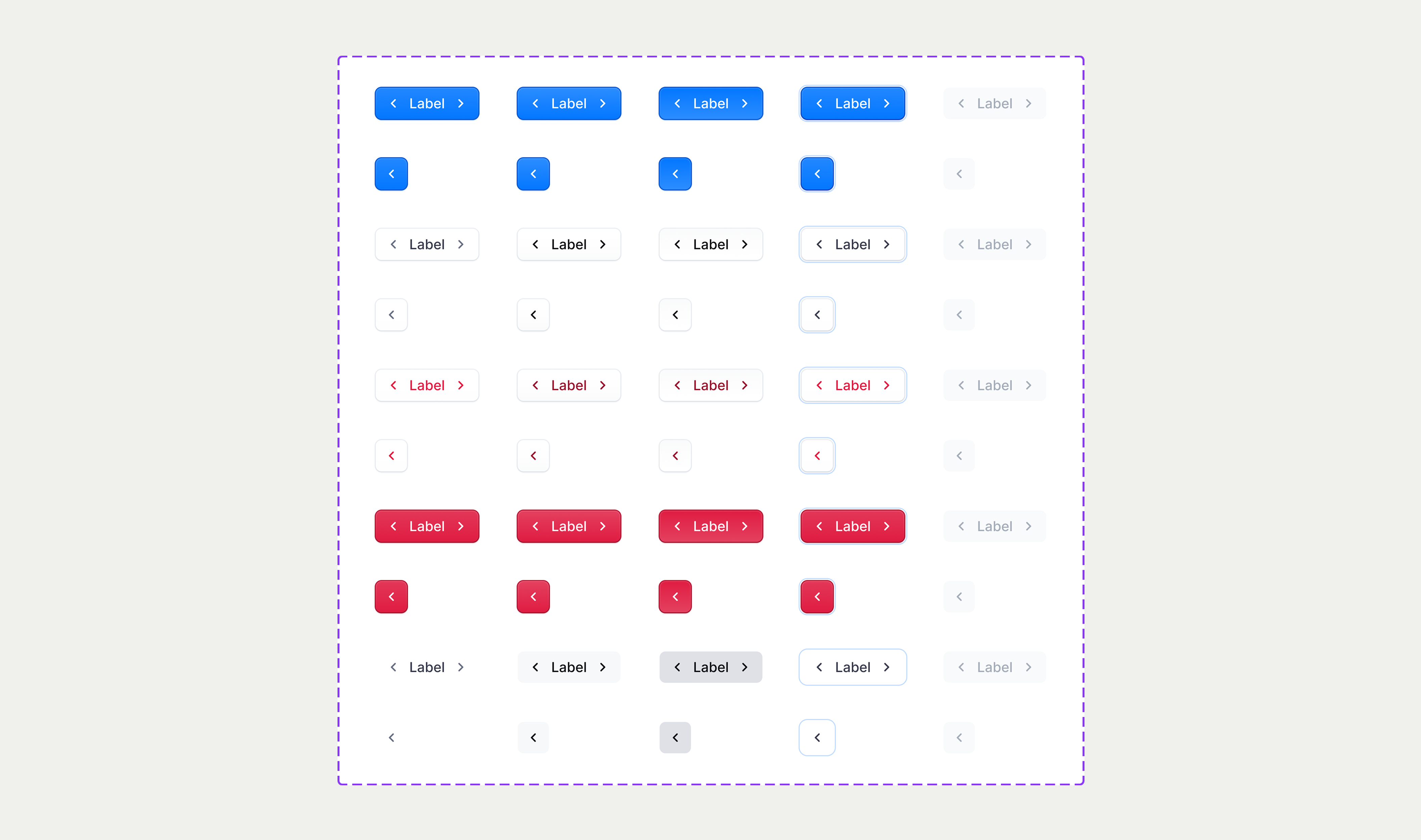
Design system
I built a token-based design system that is shared between the practice platform and the patient portal. This single source of truth keeps our components and styles perfectly consistent across both environments, allowing developers to build and launch features independently without constant back-and-forth alignment.